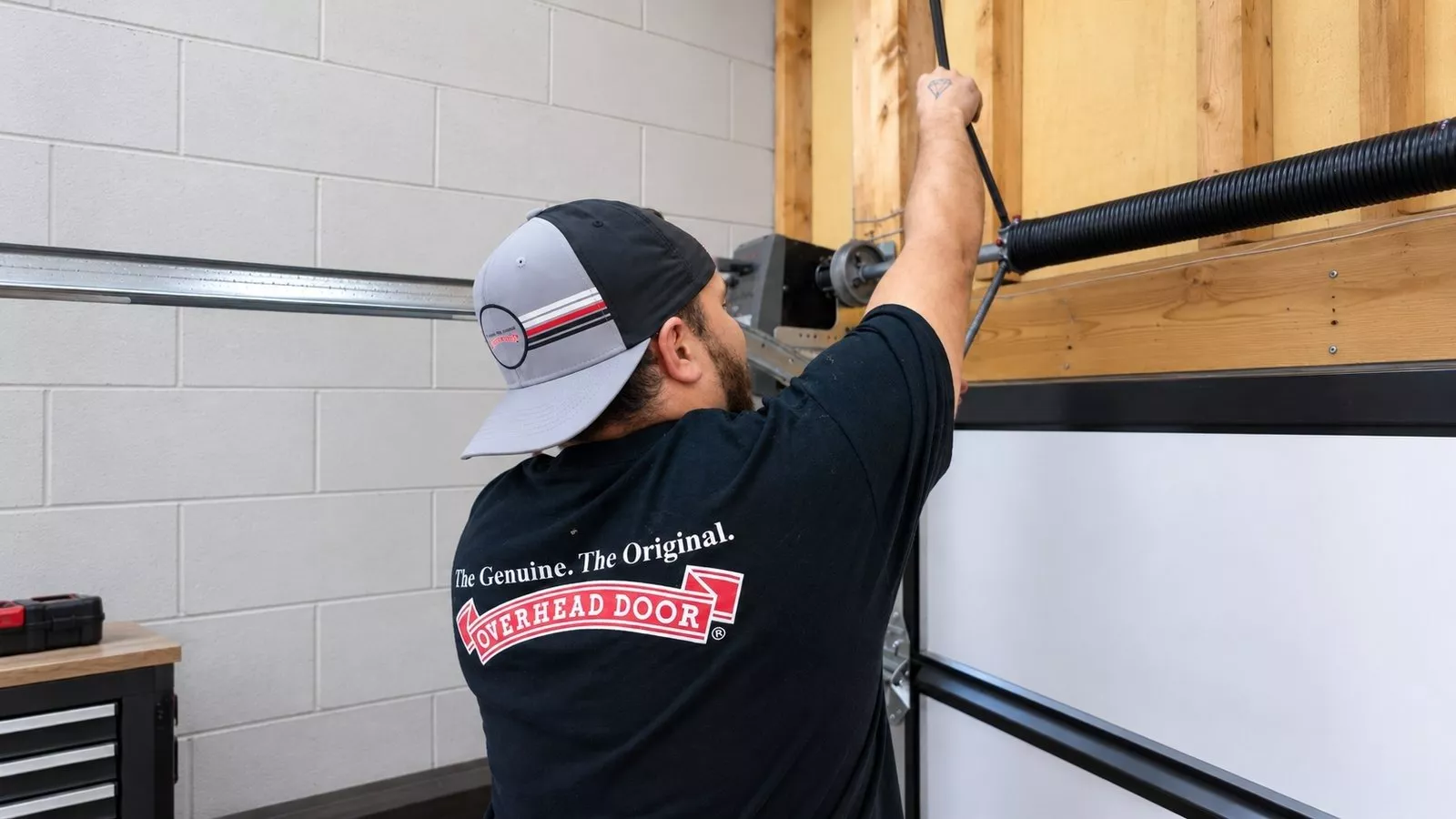
Buffalo’s relationship with snow is famous for a reason, and that reputation isn’t just a punchline — it’s a real mechanical stress test for every torsion spring in the city. Lake Erie’s lake-effect snowfall can bury a driveway in feet of snow within a single afternoon, and every one of those storms adds real dead weight to a garage door that the spring above it has to counteract. Hiring the wrong provider to inspect your spring here can lead to major problems.
A standard torsion spring stores 100 to 300 foot-pounds of torque depending on door weight, and Buffalo’s combination of heavy snow load, road salt corrosion, and dramatic lake-effect temperature swings pushes springs toward failure well before the standard 10,000-cycle rating. Snow accumulation against the bottom of the door and on the header adds weight the spring wasn’t necessarily sized for on installation day, and repeated freeze-thaw cycles off Lake Erie fatigues coil steel faster than in more temperature-stable climates.
Homes throughout Buffalo’s older neighborhoods often still run original hardware sized for lighter, uninsulated doors — a mismatch that becomes dangerous when a generalist swaps a spring without recalculating for the door’s actual current weight.
New York has no state license specific to overhead door work, which means the burden of screening falls on the homeowner. Look for **IDA membership**, manufacturer training from Clopay, LiftMaster, or Amarr, and verified liability insurance. Ask directly: “What’s the IPPT (inch-pounds per turn) for a 200-pound door with a standard torsion spring?” A trained technician answers without hesitation.
A real quote specifies wire diameter, inside diameter, and spring length — never just “replace torsion spring.” In a climate that adds this much extra load from snow, an under-spec’d spring will fail far faster than an under-spec’d spring installed in a milder climate.
If your opener predates 1993, it most likely lacks the required safety sensors to prevent accidental injuries — replace it regardless of the door’s condition. If repair costs exceed half of replacement value on a door 15 years or older, replacement is typically the smarter call given how hard Buffalo winters are on hardware.
Given how much extra weight Buffalo’s lake-effect snow adds to a garage door, clearing accumulated snow off the door face and header before running the opener reduces unnecessary strain on an already cold-stressed spring. Lubricate spring coils, hinge pivots, and roller stems twice a year with a cold-rated silicone spray — standard lithium grease can thicken in Buffalo’s coldest stretches, causing your garage door to drag in its tracks. Inspect the bottom seal each fall; road salt and slush exposure common here degrades standard rubber faster than in drier climates, and a hardened seal lets moisture reach the bottom bracket. If your door feels noticeably heavier after a major lake-effect event compared to before it, treat that as a signal to schedule an inspection rather than waiting for a problem to arise.
Yes. Accumulated snow adds real dead weight the spring must counteract on every cycle, and that extra load accelerates fatigue in a spring that’s already thermally stressed by lake-effect temperature swings.
Single spring replacement runs $150–$300 installed on average — a suspiciously low quote is worth questioning given how much extra stress this climate places on hardware.
At least once a year, ideally before the first major lake-effect event of the season.
Choosing an overhead door provider in Buffalo comes down to the same test every time: does this technician measure, or does this technician guess? Overhead Door Company of Buffalo™ technicians are trained to run the balance test, spec-match the spring, and document what they install — this same standard should apply to any provider you choose, as outlined in this guide.